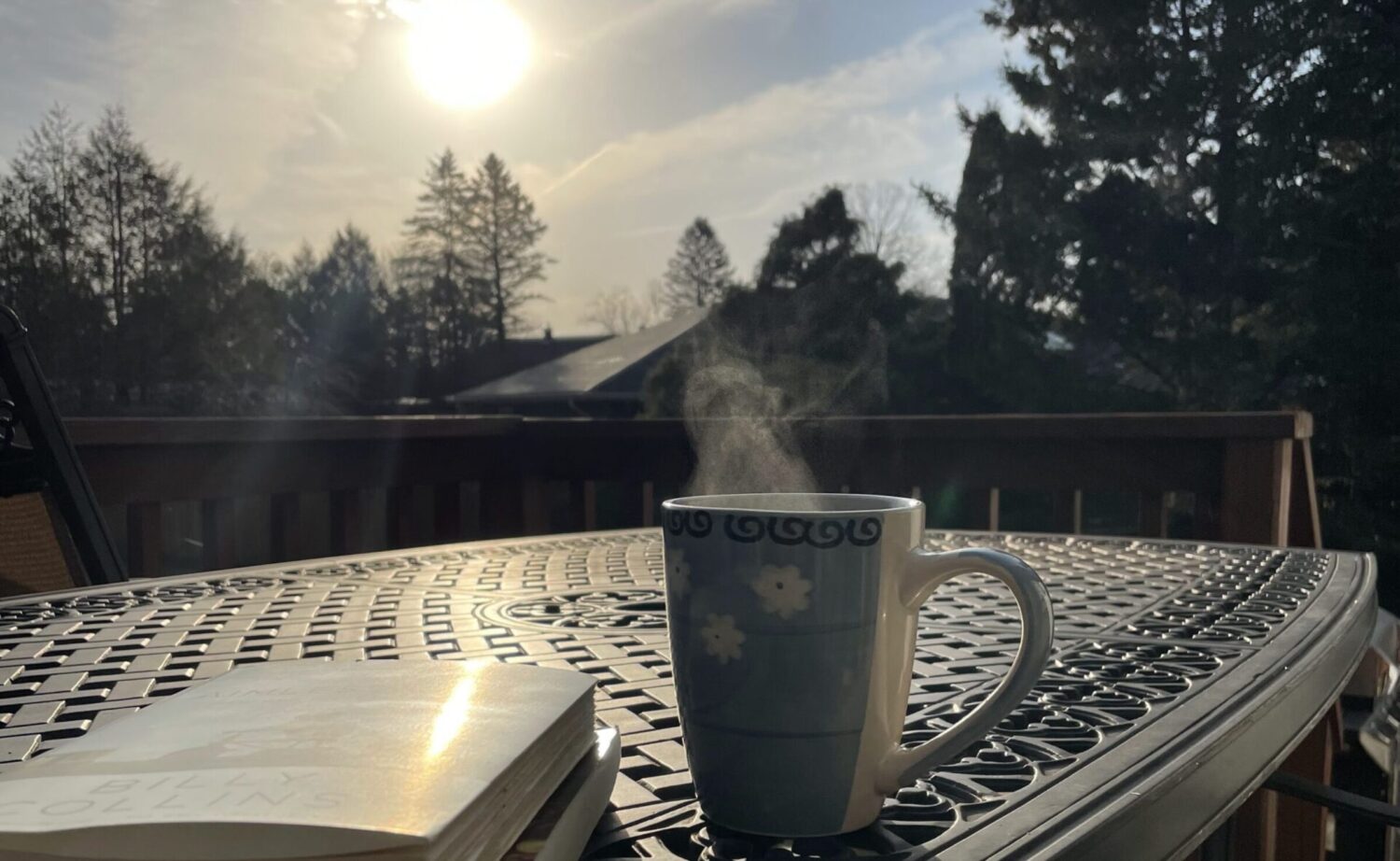

Some nights, when I decide to stay in and cozy up with a glass of wine or a cup of tea, I like to sit in the low-light dark listening to music. I’ve done this for as long as I can remember. As a little kid in first or second grade, I used to fall asleep to “Riders on the Storm” by the Doors. In high school and college, it was Pink Floyd and Van Morrison. Now, it’s anything that might seem wistful or sultry or low-key chill: “Laugh Track” by The National, “A Long December” by Counting Crows, “Soulfight” by the Revivalists, “Piano Joint” by Michael Kiwanuka.
If I’m willing and able to ignore the phone and the incessant scrolling, I tend to get contemplative. I’ll think about recent conversations I’ve had with people, or things I’ve seen and heard as I knock about the city. Sometimes, in these moments, I’ll start to do a deeper dive on why I think the way I think. I’ll prod at my assumptions, I’ll poke the versions of truth that I tell myself.
With enough poking and prodding, I might find myself on the edge of a deeper realization or a deeper consideration. Then I have to back track to figure out how I got there. What thought led to whatever other thought.
Tonight was one of those nights. With John Martyn’s cover of “Glory Box” playing, I began to recall a conversation I had last night. Specifically I was sharing, with minor consternation, that there’s a woman I’m friends with who I’ll hang out with when we run into each other at the bar, but then days or weeks will pass without us connecting. From time to time, she’ll text me saying we should hang out. I always respond – sure would love to, let me know when you’re free. And then the conversation drops until we run into each other again or until I reach out to try to start it up again. This has only happened a few times, and it only confounds me when I think about it. Tonight, I thought about it.
More specifically, I found myself thinking, I’m just not going to reach out to her anymore – it always seems awkward, or truncated, or I don’t know what. Taking such a stance felt passive aggressive and mildly petulant. I could sense the, “maybe if I disappear for bit, we’ll connect again” sentiment. But it was the idea of disappearing for a bit that gave me pause. It would be tough. My one bartender friend has already told me that he’d probably send a wellness text if he didn’t see me for a week. He would have sent one two weeks ago when I was sick and not going out to the bar, but as he was driving, he saw me walking down the street and knew I was fine.
None of that is the epiphany type of stuff. What had me somewhat perplexed was that the thing I love about my neighborhood (that I know lots of people and see someone I know almost every time I leave the apartment) can also feel constraining. If I really wanted to keep a low profile, I’d have to physically leave the neighborhood. There’s a gravity and comfort here that I sometimes want to escape.
This was the “precipice” of the evening’s realization to which I had arrived: that sometimes in our relationships, we feel trapped. That sometimes we have those moments – whether it’s from shame, sadness, anger, fear, confusion, a funk, or just wanting something different – when we don’t want to be around anyone we know. We don’t want anyone to see us sad or sick or vulnerable or less than at our best outward self. What are the options if we can’t get away? It’s an obvious irony that when people are in those spaces, especially when they’re feeling hurt, they tend to push away the people who see them most clearly or most deeply.
I can remember the awkwardness I felt loading the moving van when my wife and I got divorced. It was like we had failed at something and that failure was on display for the entire neighborhood to see. For a while, I avoided people. It wasn’t until a month or two later that my neighbor struck up the courage to sincerely and quietly ask if I was ok – talking in that hushed tone the way we talk about caner or heart disease. He saw the moving van, he saw that I was the only one coming and going from the house. I assured him that she and I were both fine and amicable, but yes, we got divorced.
When it happened a second time and the moving van came for the girlfriend who didn’t work out, the feeling of failure and/or shame returned. A different neighbor had asked about the situation – they always saw us walking the dog together. I didn’t want to be seen, I didn’t want to be around the people I knew. Eventually, I left.
Last night’s conversation at the bar started between me and two of my friends as one of them was half-drunkenly lamenting one of his past relationships – one in which they still see each other from time to time. I couldn’t hear him very well over the music and half-tuned out. When he left, the other friend and I continued. He’s a good bit younger than I am and thinks I have a wise perspective. I’m not so sure about that.
We swapped stories. He told me about a four-year relationship he was in. Even though it was seven or eight years ago, he thinks about this one a lot. He left. He felt trapped. In the end, she asked him if it was all a lie. He’s since had to admit that he was being dishonest with himself about what he wanted and stayed because he didn’t want to hurt her. He’s more self-aware now, wishes he had handled it better. The irony isn’t lost on him that he seems much better prepared for it now. For him, at the time, the only option he had was to leave, to disconnect, to delete, to block. I said that aside from moving away (which was a form of disconnecting / detaching), I try not to block or delete or close doors on people. Though I don’t think it’s ever happened, I try to remain open to the idea of honest conversations either for closure or some semblance of reconciliation. I shared that my theory is that short of egregious or abusive behavior, I prefer to remain open because taking the “dead to me” approach seems like avoidance.
The playlist ended. I put on another one. Because the universe has a sense of humor, the song playing as I finish writing this is “Sad Days, Lonely Nights” by Junior Kimbrough. The short and simple version of the evening’s contemplation took the form of a question. When we have those moments of wanting to escape, but feel too trapped to find the space, what should we do? What could we do? Because each situation is different, there’s no universal answer, but I tend to fall back on wait it out, pull back and see if there’s a root cause, see if it’s just a moment that’s obscuring better moments just beyond. And because there’s always time for one more song and a little more contemplation, the last song of to come on, ironically, is Chris Stapleton’s “Starting Over.”