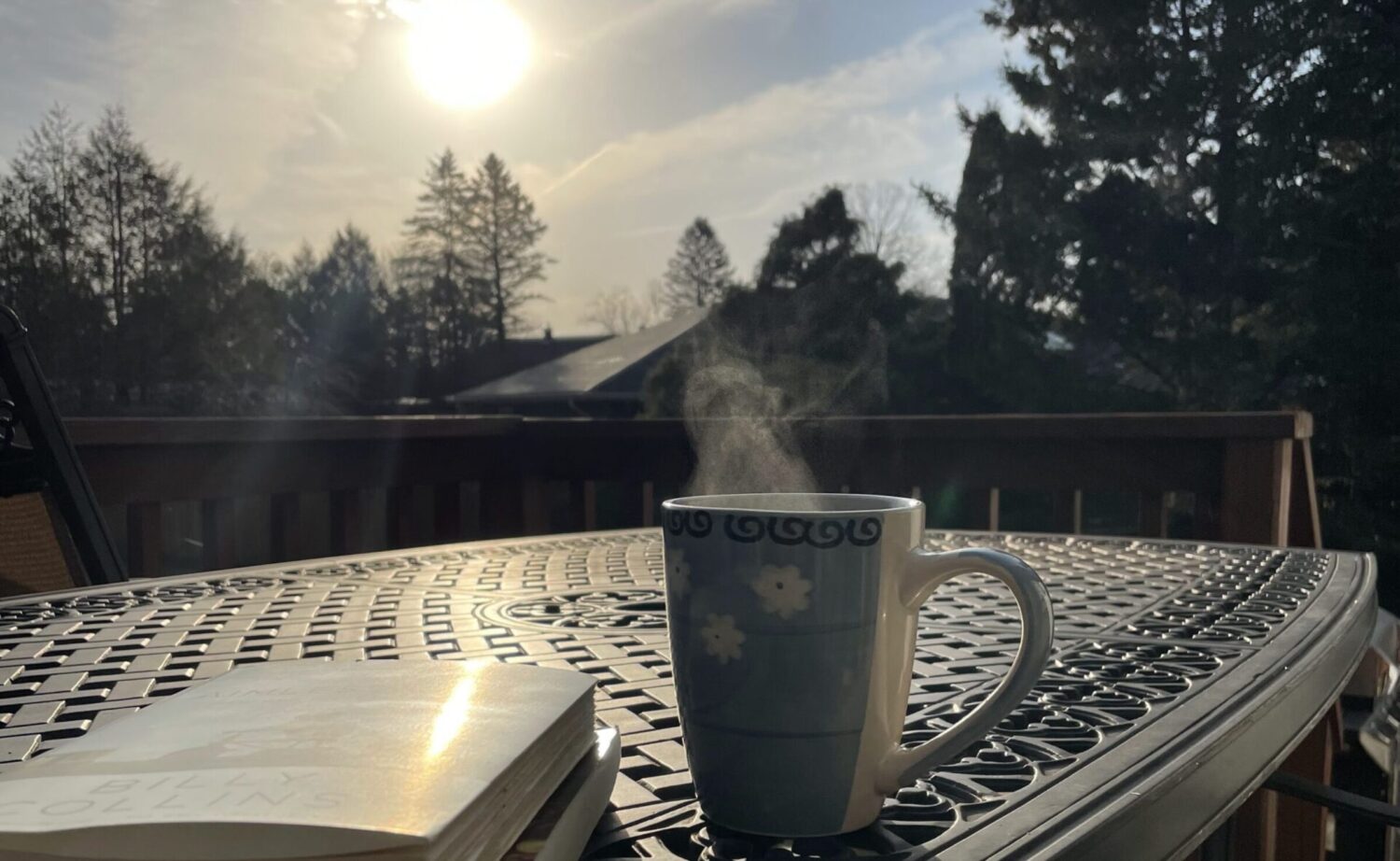
When I can arrange it, I revel in the slowness of mornings. With sunshine and coffee, I try to stretch the moments for as long as I can. In the early hours, I love the way the mind loafs, when allowed to loaf. Meditations on people, or moments, or life’s many wandering paths, or the futures that might yet unspool like a long road cutting between the distant hills. I can be on my sofa half-imagining, half-remembering what it’s like to greet the sun from outside of my tent in Joshua Tree. I can be alone yet oddly comforted by past moments of tenderness, a good-morning kiss on the head, the sidle up to a familiar bodily nook. I can read a poem and step into the speaker’s skin or be spurred on to my own version of the story.
When I’ve told people, I’d love to be retired, it’s usually the slowness of morning that I’m thinking about. Sometimes, they’ll ask if I wouldn’t get bored. Pssshhh. That’s when I’m reminded of the poet Mary Oliver who tried to dedicate the best parts of her day to herself, her morning walks, her writing, and all that the mind’s wandering entails. Compared to our deepest loves – those nearly righteous and holy spaces in the mind where we can get truly lost – the world of work with it’s emails and meetings and calendar invites seems like a thin and meaningless intrusion, a barbaric assault on the very sanctity of time.
In the slowness of morning, I can get lost thinking about those moments when I’ve felt most alive. It’s almost always about travel or companionship or being present in the physical world. Naturally, as a measure of time, morning has its limitations. It necessarily precedes something else: mid-morning, work, groceries, exercise, commute, errands, or whatever else we have stacked in those other hours of the day. Morning seem best when we let the quiet in, when slowing down is our intent.